













NEWS
<Event Report: MIXI MEETUP! AI DAY 2026>MIXI’s Company-wide AI Adoption Today: 23 Case Studies, the Management Strategy Behind Them, and the Next Step in an AI-Centric Organizational Transformation -Archive videos of the event are now available on the MIXI TECH&DESIGN YouTube channel-
Tokyo, Japan, April 9, 2026 — MIXI, Inc. held “MIXI MEETUP! AI DAY 2026” on March 27, 2026. It consisted of a variety of sessions to share practical know-how on AI use across the company, from product development to corporate functions.
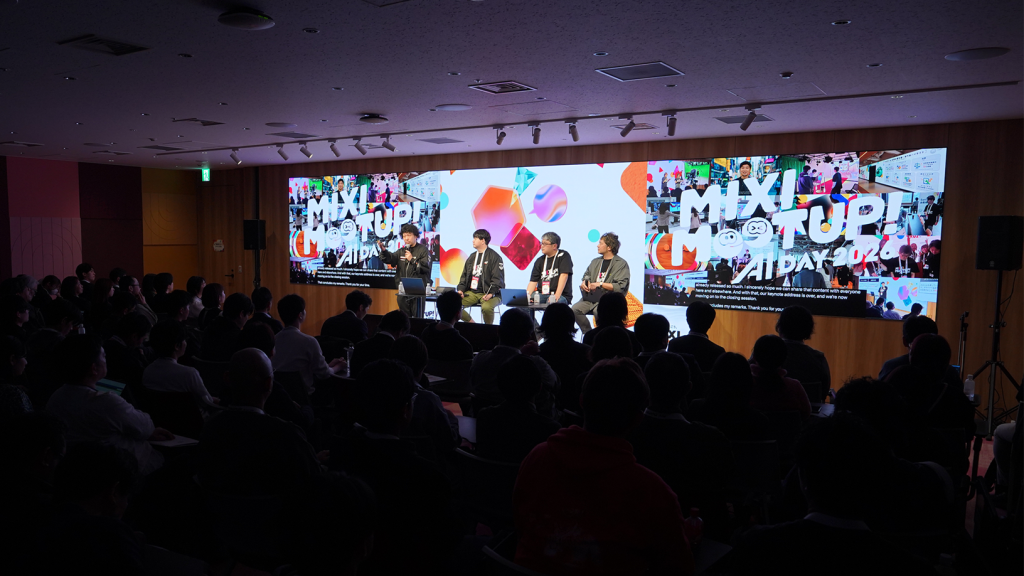
Over the past year, MIXI has treated AI not as a mere tool, but as a partner in taking on challenges and has promoted engaging in trial and error to build AI-centric workflows in every part of the company.
This event was held to share AI initiatives carried out across MIXI over the past year, led by the company-wide AI Promotion Committee* and involving employees across every role, from engineers and designers to business and back-office teams. The day opened with remarks from President Koki Kimura and featured 23 practical case studies as sessions. In the closing session, members of the leadership team took part in a panel discussion on the current state of MIXI’s company-wide AI strategy and what MIXI’s next steps will be. Archive footage from the event, excluding some portions, is available on the MIXI TECH&DESIGN YouTube channel (https://www.youtube.com/@mixi_developers).
*AI Promotion Committee: A company-wide cross-functional organization made up primarily of executives, business division heads, and ambassadors appointed by each department. It is responsible for tracking the implementation progress of AI initiatives and promoting their use across the company.
From Just Using AI to Putting it at the Center: The trial and error of 23 real-world case studies, and the results they produced
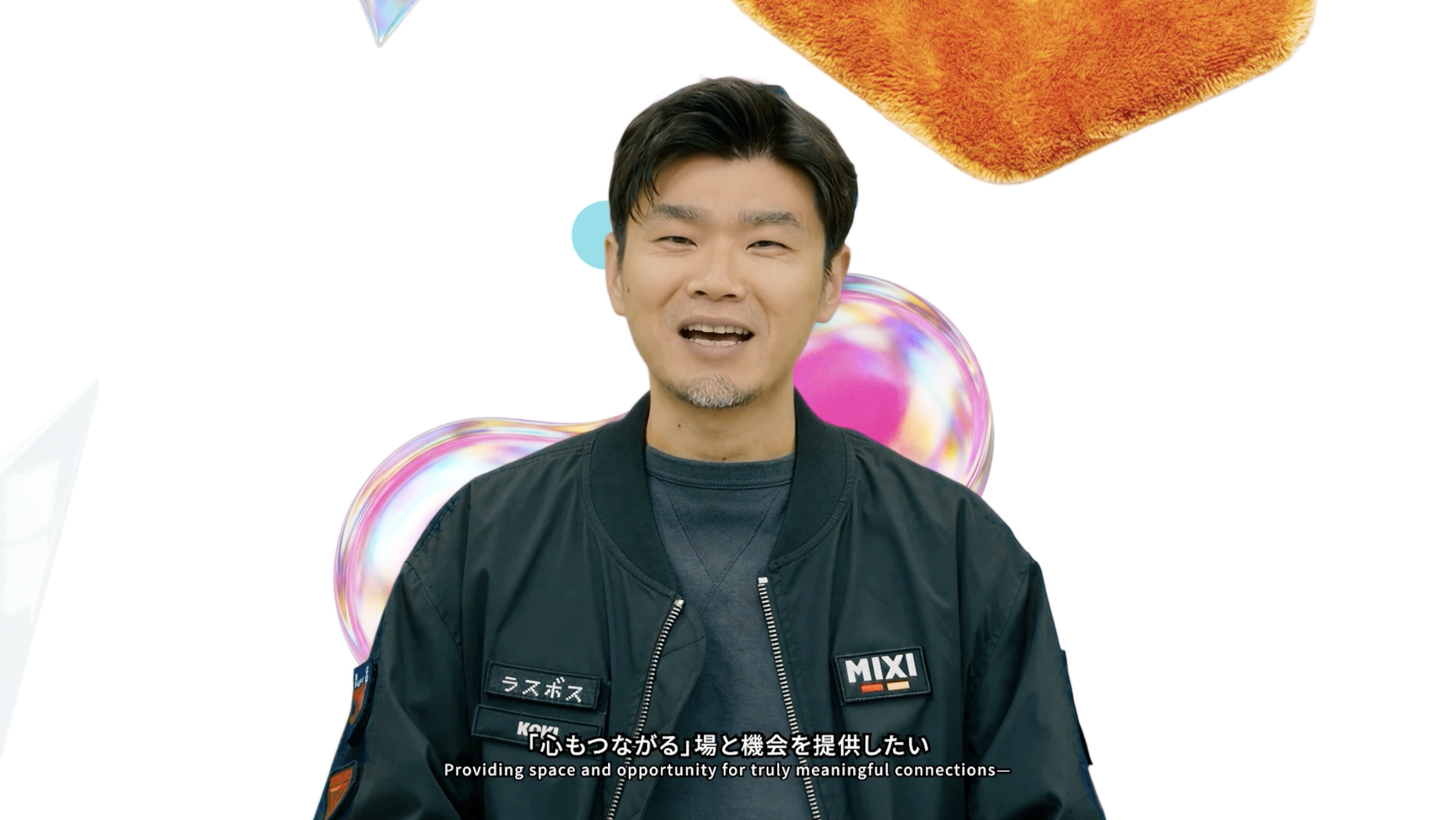
In the opening session, Koki Kimura appeared as a multilingual AI avatar and spoke about MIXI’s long-held belief in creating space and opportunity for truly meaningful connections, as well as the company’s history of continuing to take on new challenges in response to changing times. He also declared that MIXI would approach AI not simply as a technology, but as a partner that brings people closer together and creates new connections. Across the sessions, presenters shared 23 practical examples from the past year of efforts to make AI use a standard part of work across engineering, design, business, and corporate functions. Here are a few highlights from sessions in each area.
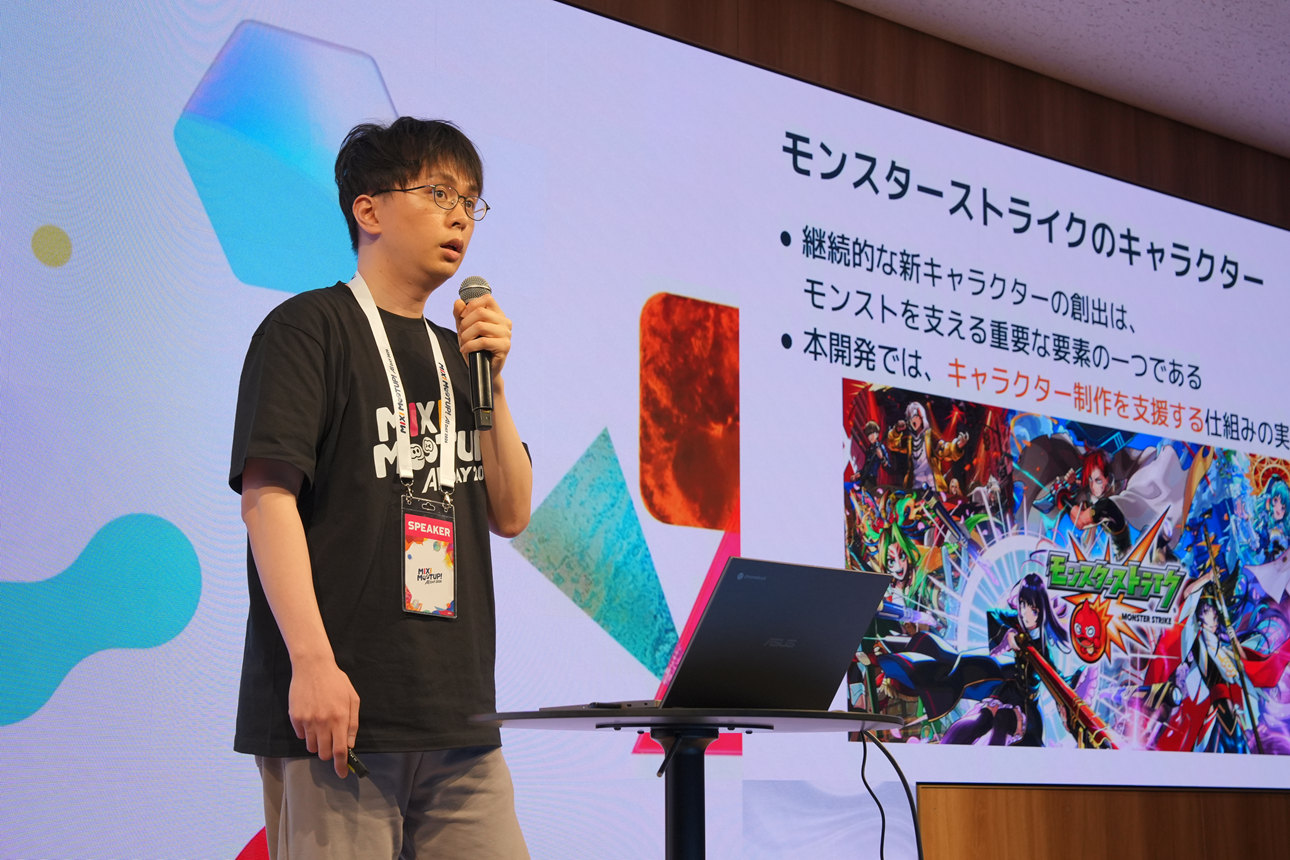
Digital Entertainment: Dramatically Shortening Time Taken to Check for Similar Existing Characters With Cross-Modal Search, an AI System Built on 10 Years of MONSTER STRIKE Character Assets.
For the Digital Entertainment segment, a development case study on a proprietary cross-modal search system for MONSTER STRIKE was presented. This system was designed to make the most of a vast library of more than 10,000 MONSTER STRIKE character assets. Searching for similar characters had traditionally required significant time and effort, and even with conventional cross-modal search, it was often difficult to tell which design elements, such as facial expressions, costumes, or motifs, were driving the match. To solve this, the team developed a proprietary approach that uses an LLM to extract design elements from images and pass them through text as an intermediate layer, making the search criteria much clearer. This enabled highly accurate searches for ambiguous nuances and complex concepts such as bear-like elements or a car interior with light streaming in. As a result, the team significantly shortened lead times for research and design brief creation, reducing working time by approximately 300 hours per year. The project was also presented as a case study in broader productivity gains, including lower OJT costs for new team members.
Sports: How FC Tokyo Transformed Operations with Automated PR Photo Selection and AI Survey Analysis
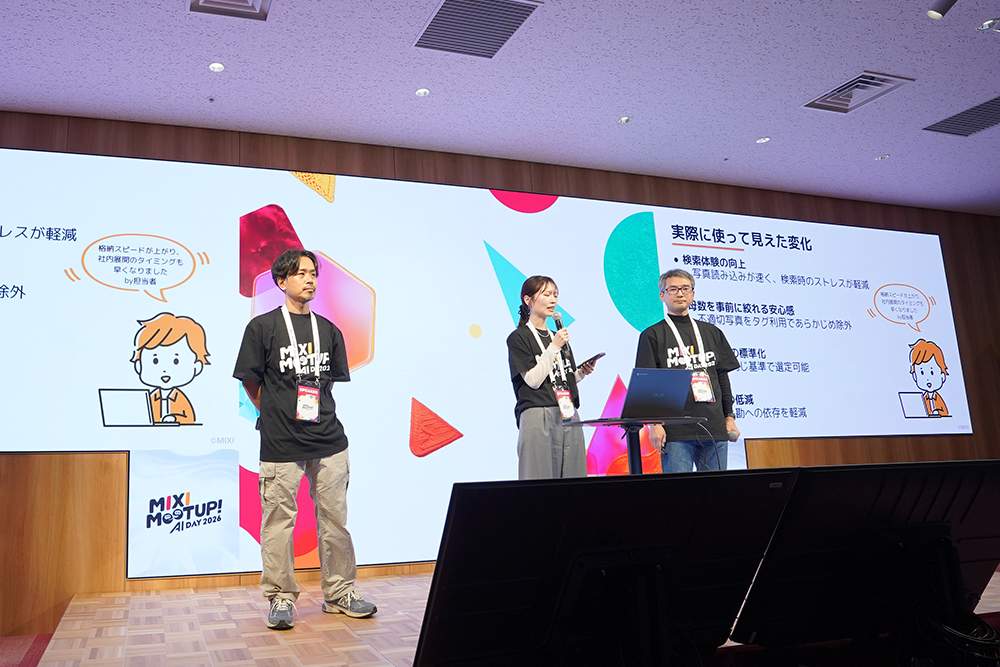
For the Sports segment, a case study on using AI to enhance FC Tokyo’s PR operations was presented. To streamline the task of selecting appropriate photos from around 10,000 images per match, the team built an automated tagging system that combines facial recognition with generative AI. This reduced the manual review workload and removed reliance on individual judgment. They also implemented a proprietary AI tool for analyzing attendee surveys that captures context and clusters open-ended responses. By building an environment where customer feedback can directly feed into the development of new products and operational improvements, this session served as an advanced example of embedding AI into a real-world scenario that resulted in accelerated club operations.
Lifestyle: How FamilyAlbum Built a Self-Directed AI Adoption Model Through Organizational Design – Creating 100 Improvement Examples in Six Months and Strengthening Cross-Team Collaboration Through Shared Goals and Community.
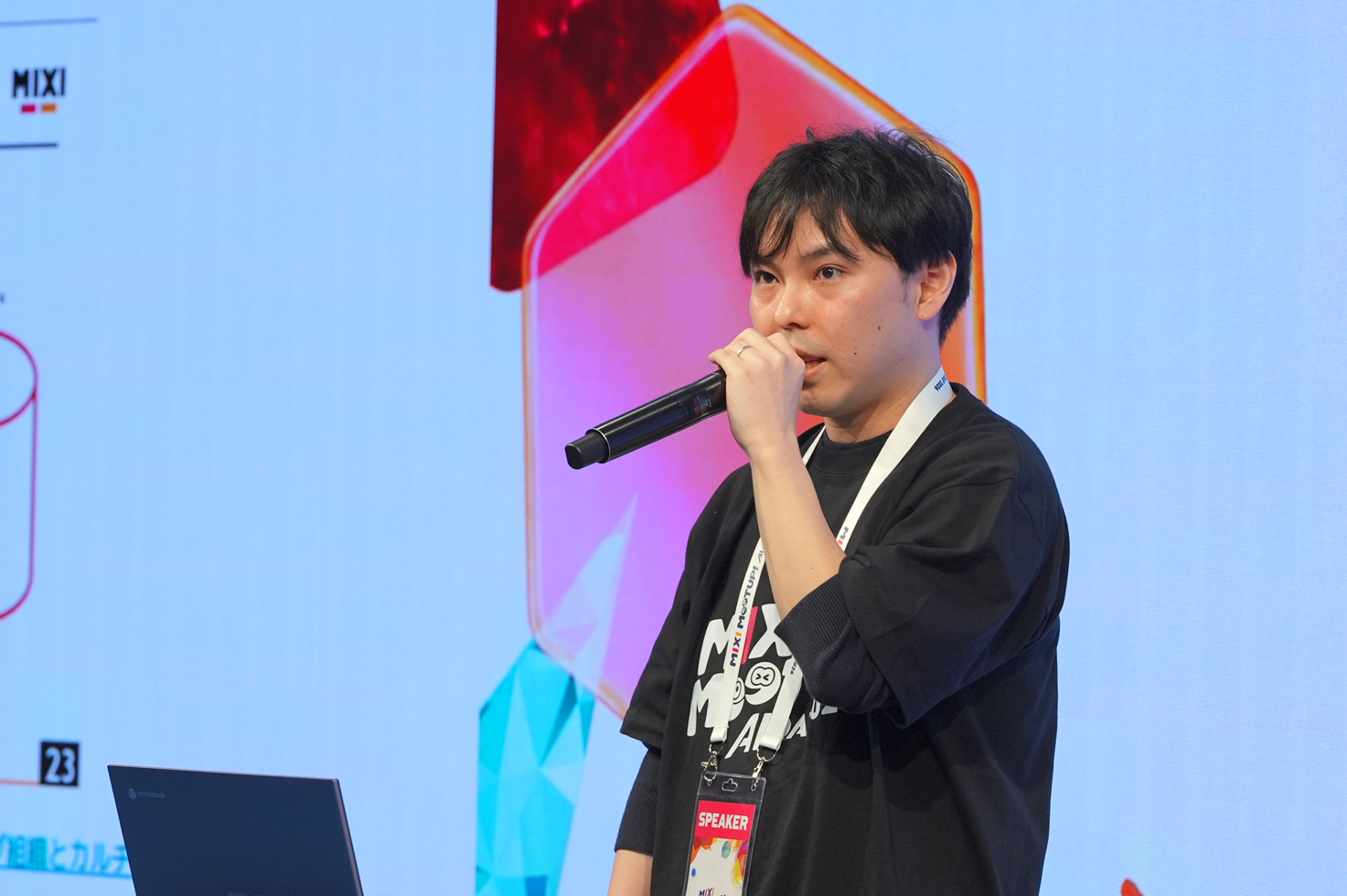
For the Lifestyle segment, the FamilyAlbum team presented a practical approach to AI adoption that moves beyond individual skill-building and translates AI use into organization-wide results. They detailed first creating an experimental environment where anyone could use AI, which led to around 100 self-directed improvement examples in just six months. They also set a shared goal of improving operational efficiency by 30% across the organization, while leaving each team to define what that goal meant in practice. This enabled teams to rethink core workflows in ways that led to meaningful changes, including shorter lead times. In addition, they launched an AI community made up of the people leading AI adoption in each team, strengthening collaboration across the organization. The session also shared an organizational development perspective: the essence of successful AI adoption lies in organizational design.
Design: 365 Days Spent Building An AI-Centric Production Workflow by Embedding AI at Every Level
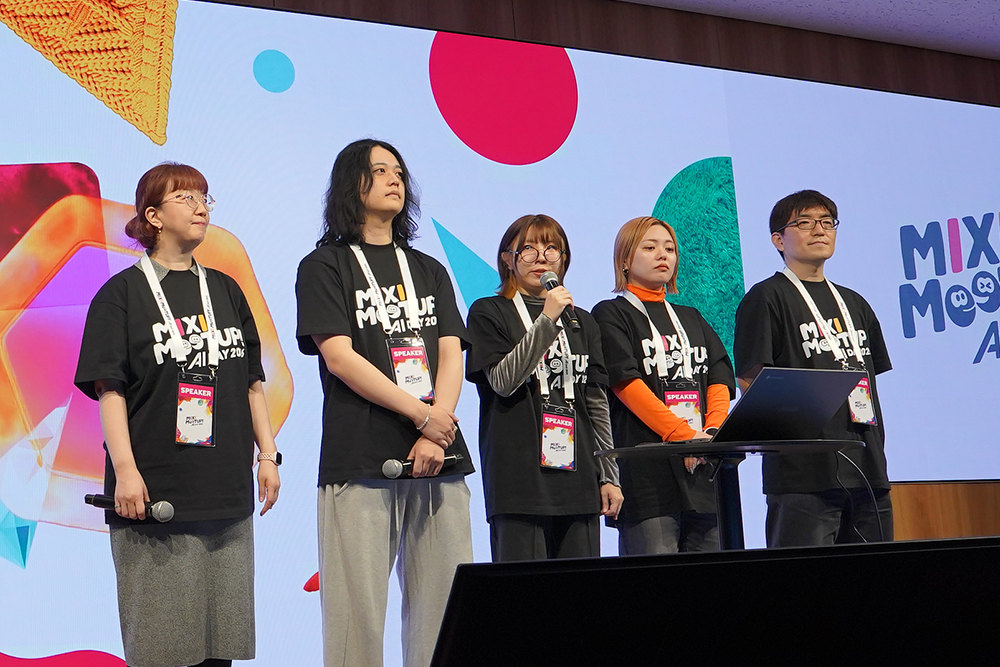
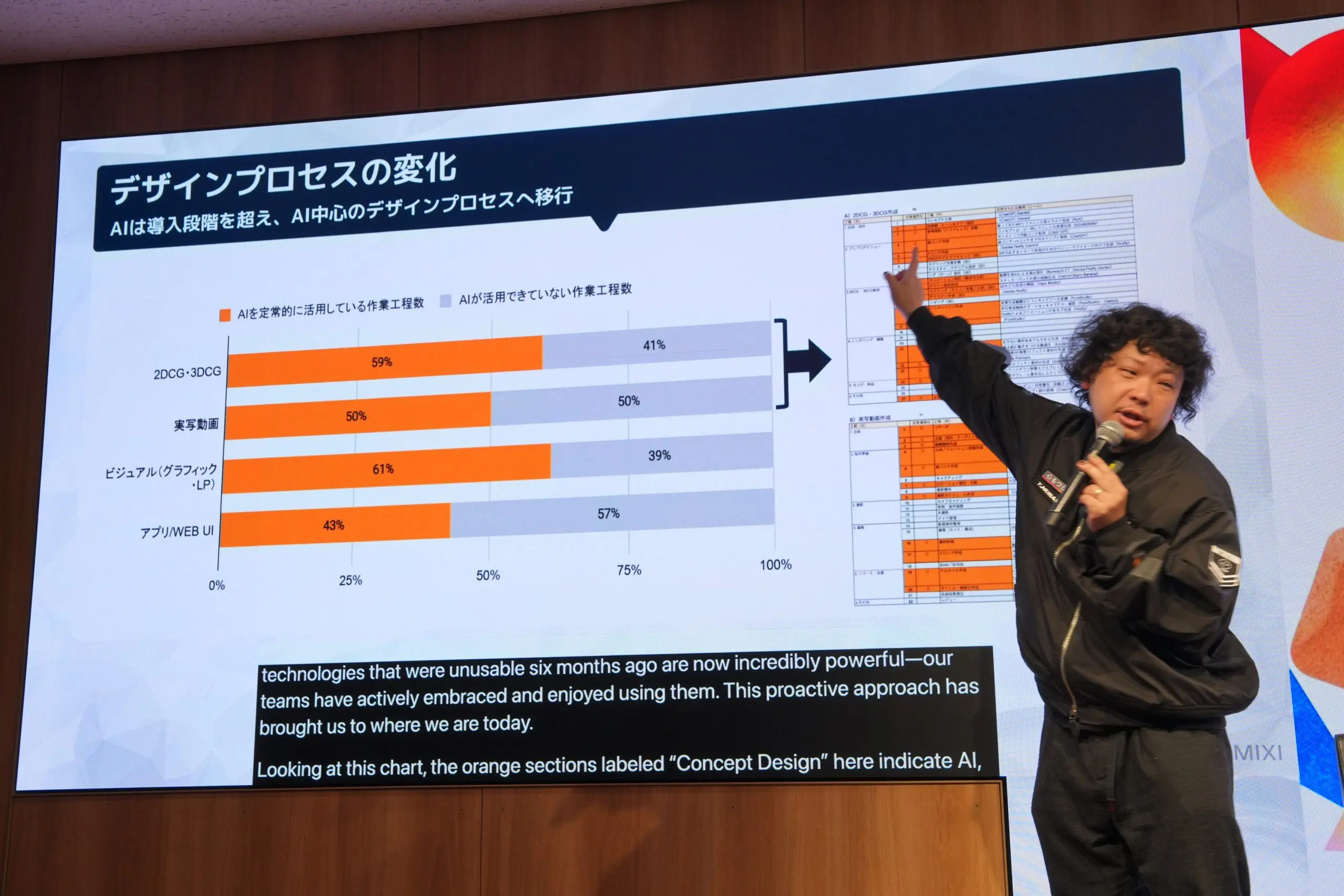
The Design Division presented practical examples of how it has applied AI over the past year. In UI/UX design, the team developed a proprietary no-code plugin using conversational AI, cutting review time in half. This created an environment where they could focus more on what matters most: the user experience. In CG video production, they reduced workloads through script development and expanded creative possibilities with generative AI, significantly shortening production time and lowering costs. In development and implementation work within the design organization as well, they used Claude Code throughout the entire process, from design and implementation to review and QA, reducing production effort by approximately 50%. The session highlighted the potential of a new production workflow in which people collaborate with AI across job functions.
In parallel with these business-side efforts, AI adoption is also steadily advancing in corporate functions. Also highlighted were initiatives to incorporate AI into highly specialized work, including DX in the Legal Affairs Division, a shift in the handling of intellectual property to be more strategic and proactive, and changes to the decision-making and reporting cycle in corporate promotion, all with the aim of transforming how the organization itself is run.
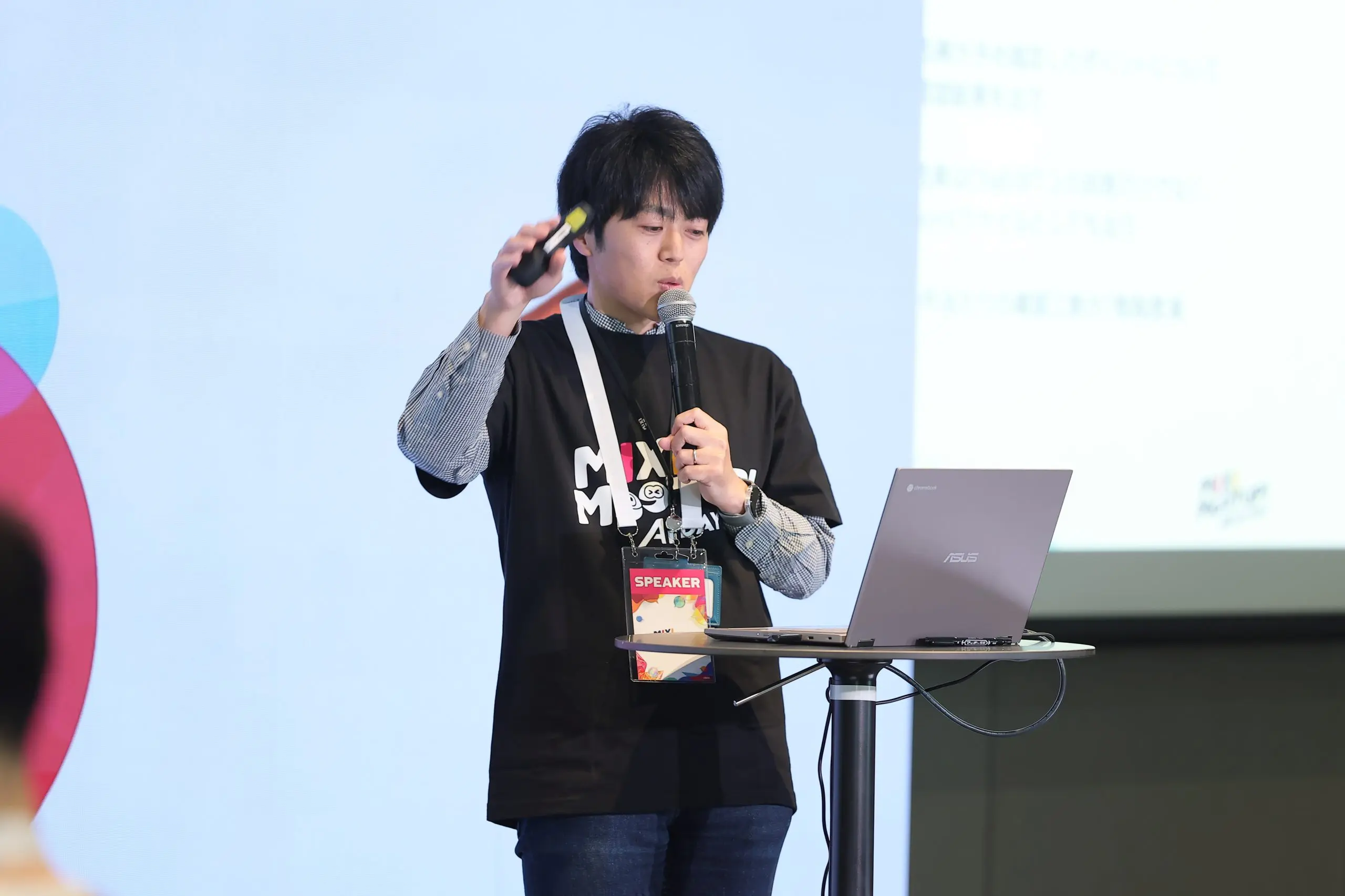
【Legal】The Legal Affairs Division presented a case in which, despite having no prior programming experience, they were able to independently build no-code tools such as the “Legal Procedures QA BOT”. The team also shared back-office transformation results, including reducing outsourcing costs for some tasks, such as terms-of-service reviews, to zero and cutting the lead time for policy and terms checks by about 70%.
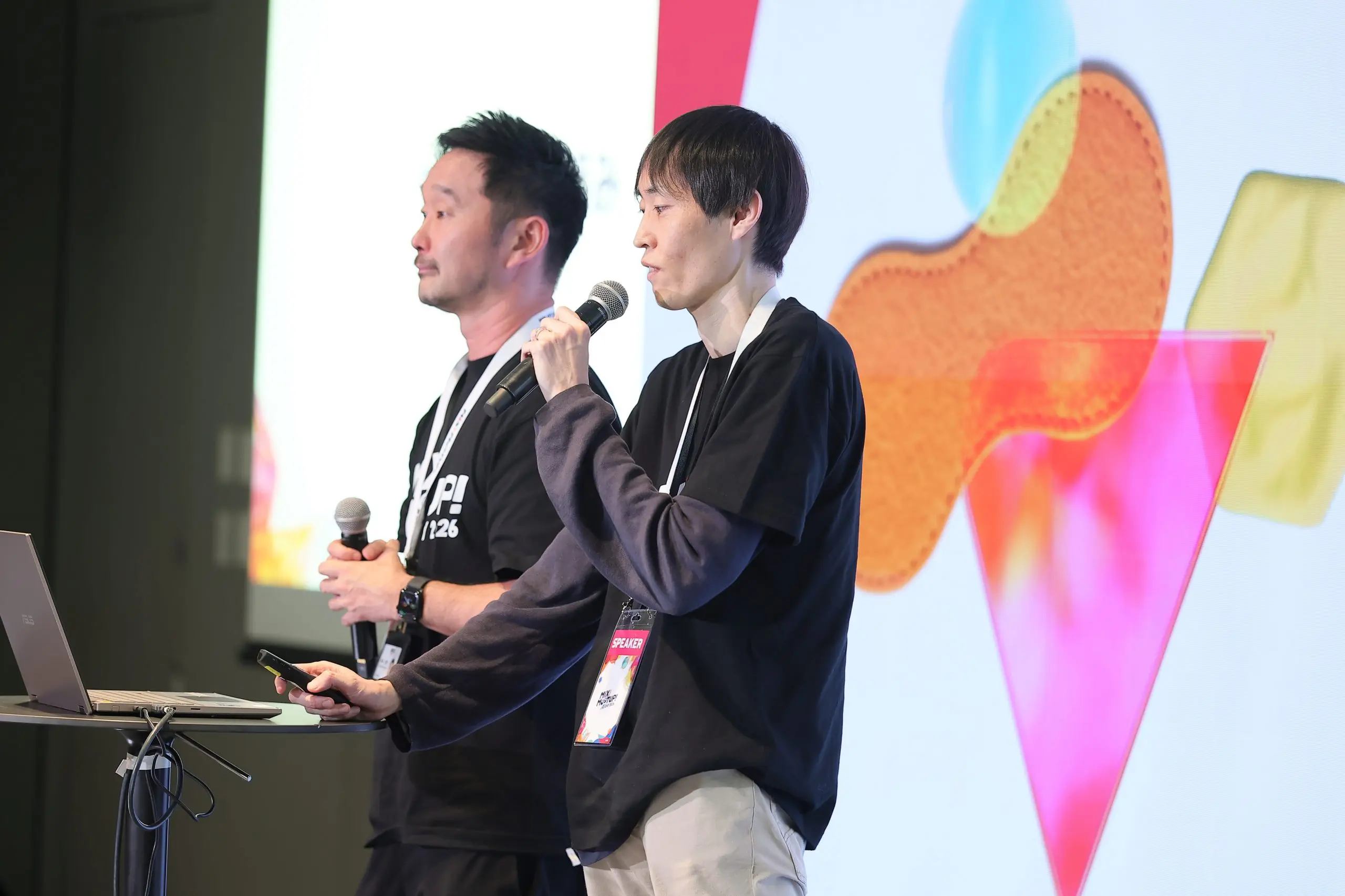
【Intellectual Property】To help intellectual property operations keep pace with the speed of business expansion, the Intellectual Property team is using AI for tasks such as patent searches and trademark classification. They explained that this has reduced lead times by as much as 90% and shared their vision for a more proactive IP handling that uses the time created to play a management consulting-like role.
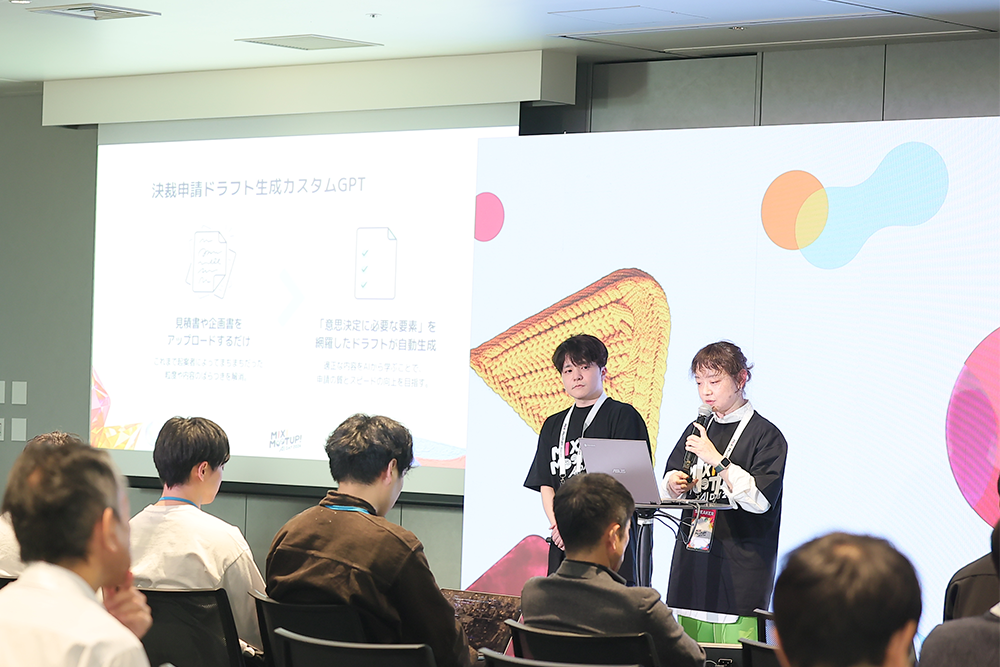
【Corporate Promotion】The Corporate Promotion team introduced initiatives to use AI to transform the flow from decision-making to performance analysis. In addition to using AI to review management meeting materials and automatically draft approval requests, the team also detailed how an “FP&A Agent AI”, co-developed with Loglass Inc., was introduced for FP&A aggregation and analysis, significantly reducing the time required to handle the work.
Global: PointsBet’s AI-Native Organizational Transformation and Data Democratization – The AI Transformation Journey at PointsBet.
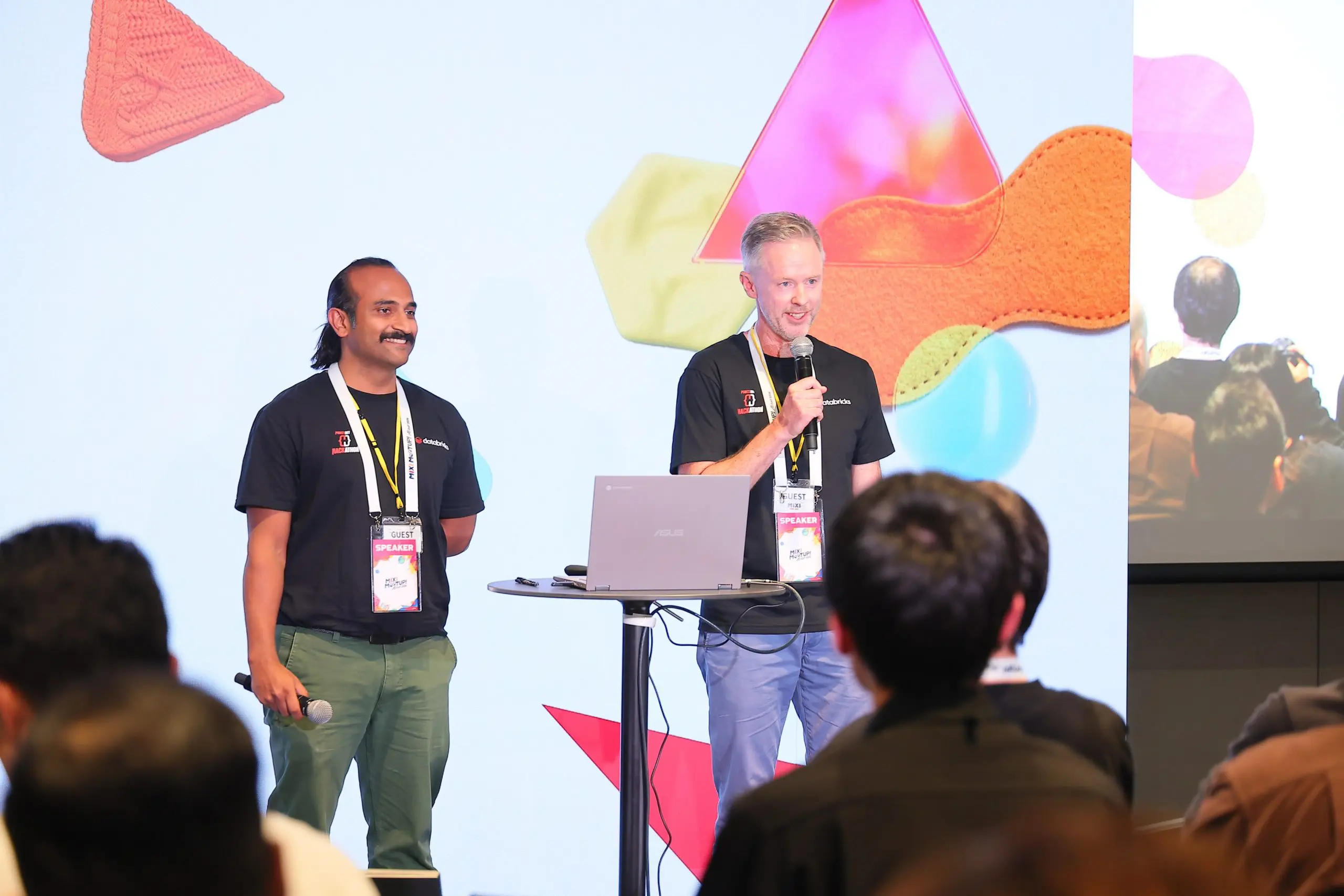
In a special session, Dan Lucas, CTO of PointsBet, and Praveen Kumar, Head of Data and AI, took the stage to introduce the Australian company’s AI strategy following its addition to MIXI Group last year. Framed around four pillars, including productivity gains and culture building, they shared practical examples such as an AI hackathon that saw about half of all employees participate and the democratization of data analysis through natural language. They also spoke about their strong vision for AI-native organizational transformation, with AI embedded at the core of business processes.
The Future of Company-Wide AI Adoption: AI-Centric Product Development and Organizational Transformation
In the closing session, Tatsuma Murase, who led the company-wide AI initiative, appeared alongside other members of the leadership team. Together, they looked back on the past year of AI adoption and outlined the direction of the next phase of transformation.
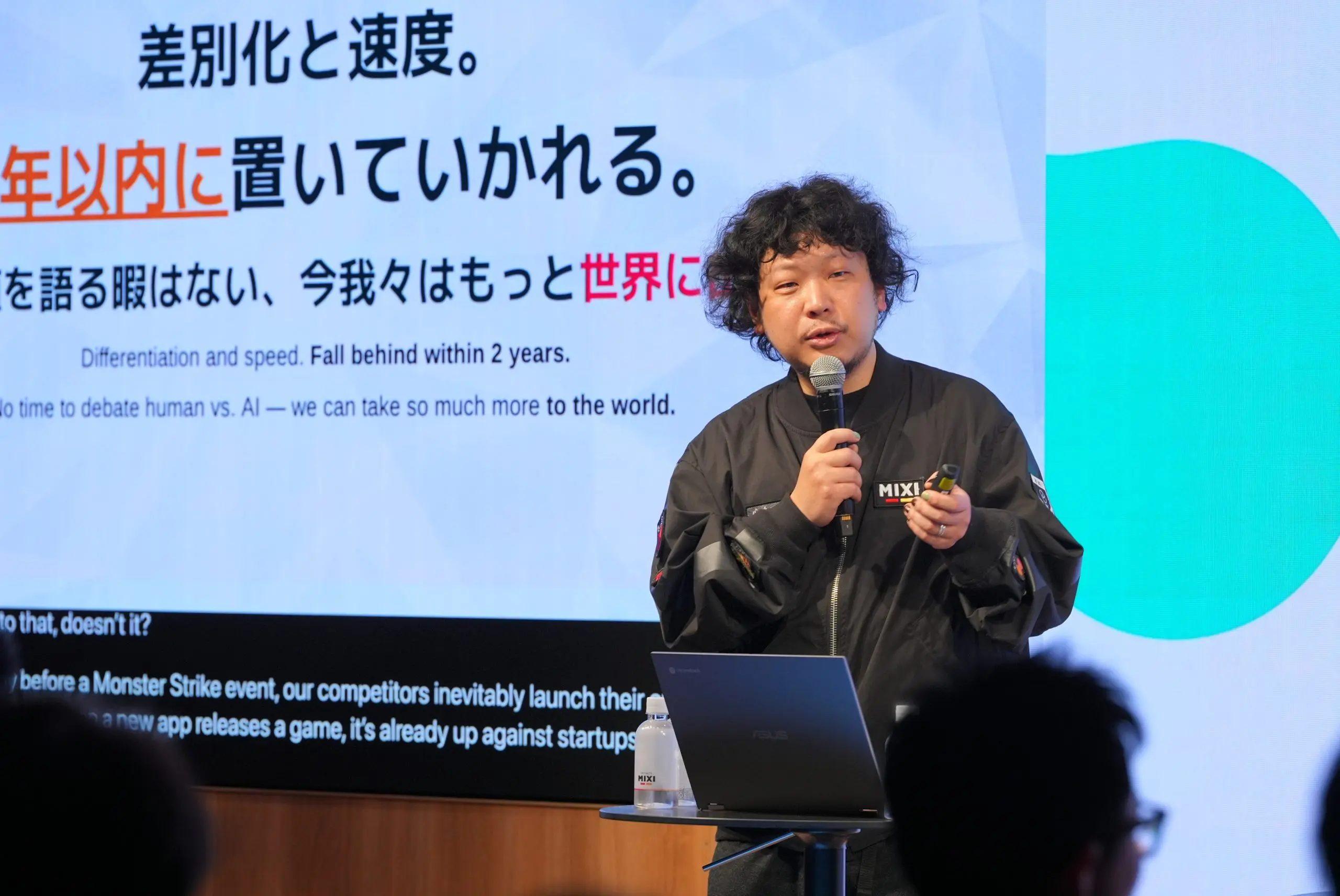
First, Murase reflected on the company’s year-long journey to drive AI adoption across the organization. He noted that the benefits of AI do not naturally spread on their own and are difficult to scale across an entire organization. With that in mind, he deliberately turned AI usage itself into the goal, setting the clear objective that every employee should use AI and pushing that effort forward with conviction. As a result of this management approach, the company’s AI usage rate reached 99%. By operating on the assumption that all employees would use AI, the company was able not only to visualize the number of initiatives and their ROI, but also to rethink cost estimates and hiring criteria, fundamentally transforming management decision-making as well as development and design processes themselves. Murase declared that the company has now moved beyond the stage of asking whether people can use AI and entered a new phase focused on how to use AI to deliver results and bring valuable products and services into the world.
Next, CFO Kohei Shimamura, CTO Junpei Yoshino, and CDO Yoshiyuki Yokoyama each shared how AI is reshaping company business today and their perspectives on what’s coming next. Shimamura said that AI has dramatically increased the depth and quality of thinking behind management decision-making. Looking ahead, he said the company will optimize the boundary between areas where human involvement is essential and areas that can be entrusted to AI. In the future, he added, the goal is to make management more agile, with AI planning business scenarios and running PDCA cycles in real time. Yoshino highlighted results on the development side, where AI now generates about 40% of all source code, and said he wants to further accelerate the integration and evolution of data. He described a vision of removing the barrier between proprietary data and AI, while also using AI for decisions such as whether to release new ideas, creating an environment where the company can quickly launch what it wants to bring into the world. Yokoyama emphasized the transformation is taking place in tangible ways, saying that the era has arrived in which teams first test with AI and then build. Going forward, he said the company will take on the challenge of applying AI across the entire design process and building an AI development pipeline integrated with engineering. By doing so, he aims to challenge fixed assumptions about how long feature development should take and, in his words, change the pace of time at MIXI.
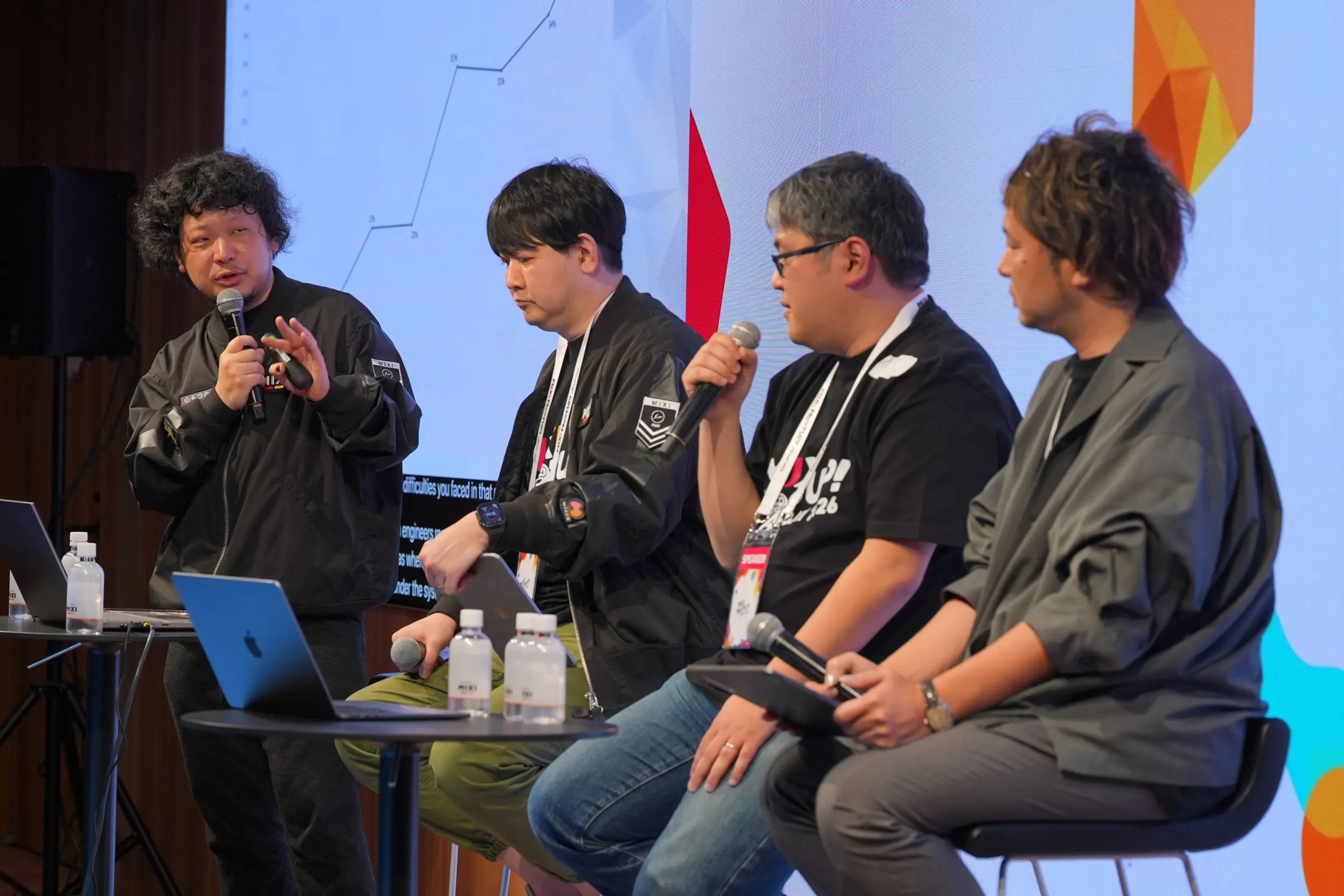
Finally, Murase shared his aspirations for what comes next: rather than showing the world only how quickly the company can move, he said he wants to show how much it can create and bring into the world. He brought the closing session to an end by expressing his determination, in an environment where AI has become as natural and ever-present as air, to return to the roots of making things and deliver more value to the world
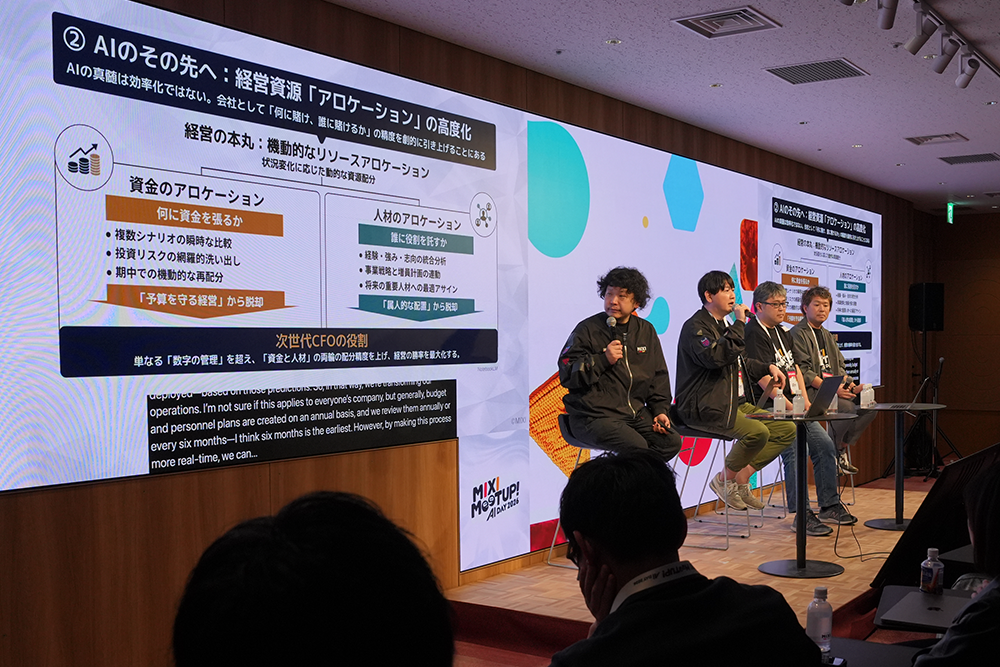
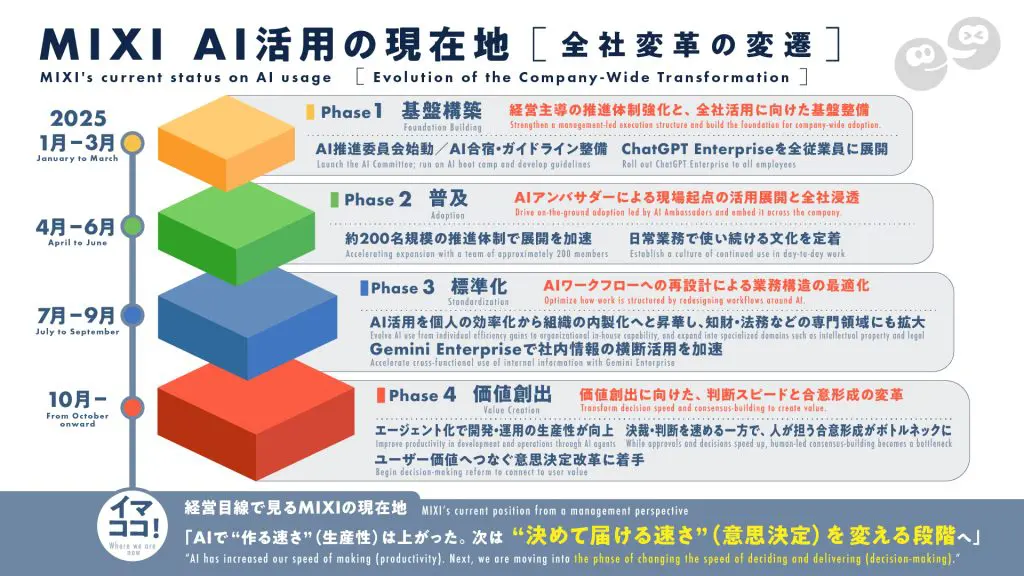
This event highlighted where AI adoption stands today at MIXI and the next move in our management strategy. Rather than limiting AI to a handful of initiatives, we are driving company-wide transformation by embedding AI into business operations, organizational management, and executive decision-making across the company. Going forward, we will continue advancing AI-driven operational transformation and taking on the challenge of creating new value.
Event highlights and presentation materials, with some exceptions, are available at the URLs below.
Archive Videos: MIXI TECH&DESIGN YouTube Channel
https://youtube.com/playlist?list=PLSy1zuVb8HVkL9aL44ejKnEbz63gKwoUc&si=A5V0YnBl8wnGadrp
Presentation Materials:
https://speakerdeck.com/mixi_engineers/
Overview of MIXI MEETUP! AI DAY 2026
• Event Name: MIXI MEETUP! AI DAY 2026
• Date: March 27, 2026
• Format: Hybrid event held onsite at the MIXI office and online via YouTube
• Event Website: https://mixi.connpass.com/event/380889/
-

-

-

-

-

- Copy link Copied!
-
 2026.10.14
Notice and Apology Regarding the Leak of Some Member Information From the Official Kotodaman Community Due to Unauthorized Access to an External Contractor
-
 2026.09.01
MIXI Group Integrated Report 2026 Has Been Released
-
 2026.08.04
MIXI Begins Supporting Yoyogi Junior High School’s Programming Seminar