







SUSTAINABILITY
Innovation in auto-tracking camera systems


Since entering the sports industry in 2019, MIXI has been making technological innovations in various sports-related businesses leveraging our accumulated expertise. Examples include the commercial use of acquired local 5G wireless station licenses and AI-based production of race streams for publicly-managed betting sports.
We developed an auto-tracking camera system and have been operating it at Kanku Ice Arena since February 2024. This system uses an indoor positioning system (IPS) together with AI image analysis technology, which provides athletes with data they can use to improve their competitive performance.
We currently integrate high-precision athlete positioning using location-tracking tags, automated tracking/filming with PTZ (pan-tilt-zoom) cameras, and heart rate monitoring via biometric sensors. In addition, by leveraging location data and video analytics to predict athlete movement and control the camera in anticipation of those movements, we achieve stable automated tracking even in figure skating, a sport characterized by fast-paced and highly complex motion.
Data such as athlete position, skating trajectories, speed, and heart rate are displayed alongside video footage, enabling athletes and coaches to review training sessions, evaluate performance, and conduct in-depth performance analysis.
Through future applications of this technology, we will contribute to the improvement of athletic performance and the creation of new viewing experiences for various sports.
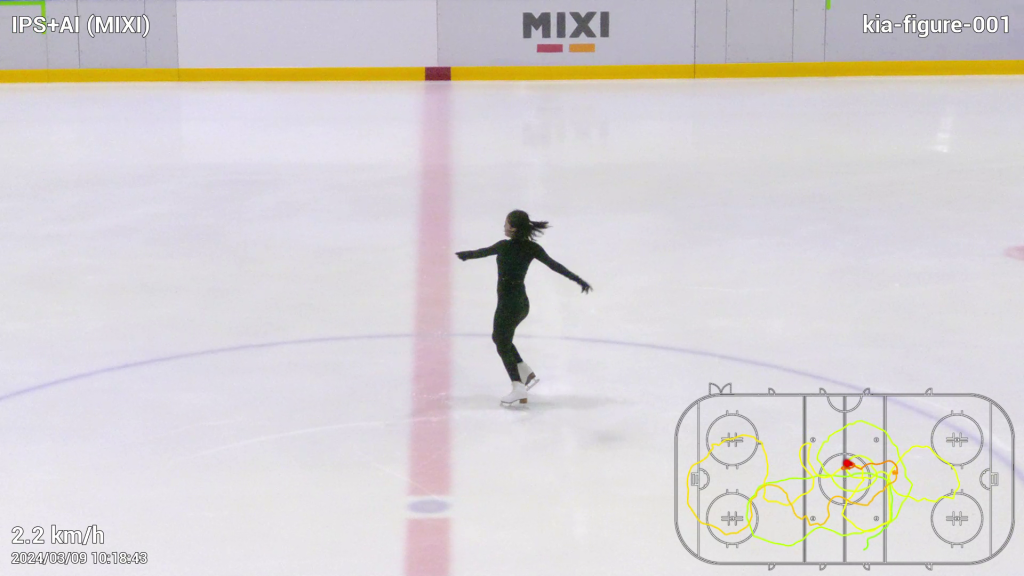
Auto-tracking camera system installed in Kanku Ice Arena
In recent years, we have been working on the development of technology utilizing indoor positioning systems (IPS), offering new spectating and analysis experiences through the use of location data in the fields of publicly-managed betting sports and sports video broadcasting.
The system built inside the Kanku Ice Arena combines positioning technology with AI image analysis, biometric monitoring, and video compositing technology to create an integrated video platform that helps improve athletic performance.
Using locators (location antennas) installed throughout the arena, we are able to track the real-time location of an athlete wearing a location tag. By combining this location data with AI image analysis to predict the athlete’s movement, we can proactively control PTZ cameras, achieving stable automated tracking even during high-speed skating and abrupt direction changes. This technology is capable of detecting the fast, complex movements of athletes and can automatically track and capture footage of a specific athlete even when others are skating in the same rink.
Heart rate data can also be collected using a biometric sensor. This data, together with skating trajectory and speed data derived from location information, can be overlaid onto video footage, enabling athletes and coaches to analyze training performance from multiple perspectives.
The generated video can be recorded and played back on terminals located rinkside, allowing athletes and coaches to review their performance immediately after skating sessions.
Our IPS is also used in Kanku Ice Arena’s tracking camera system (made by the company Qoncept).
Footage of training taken by the auto-tracking camera system
System Overview
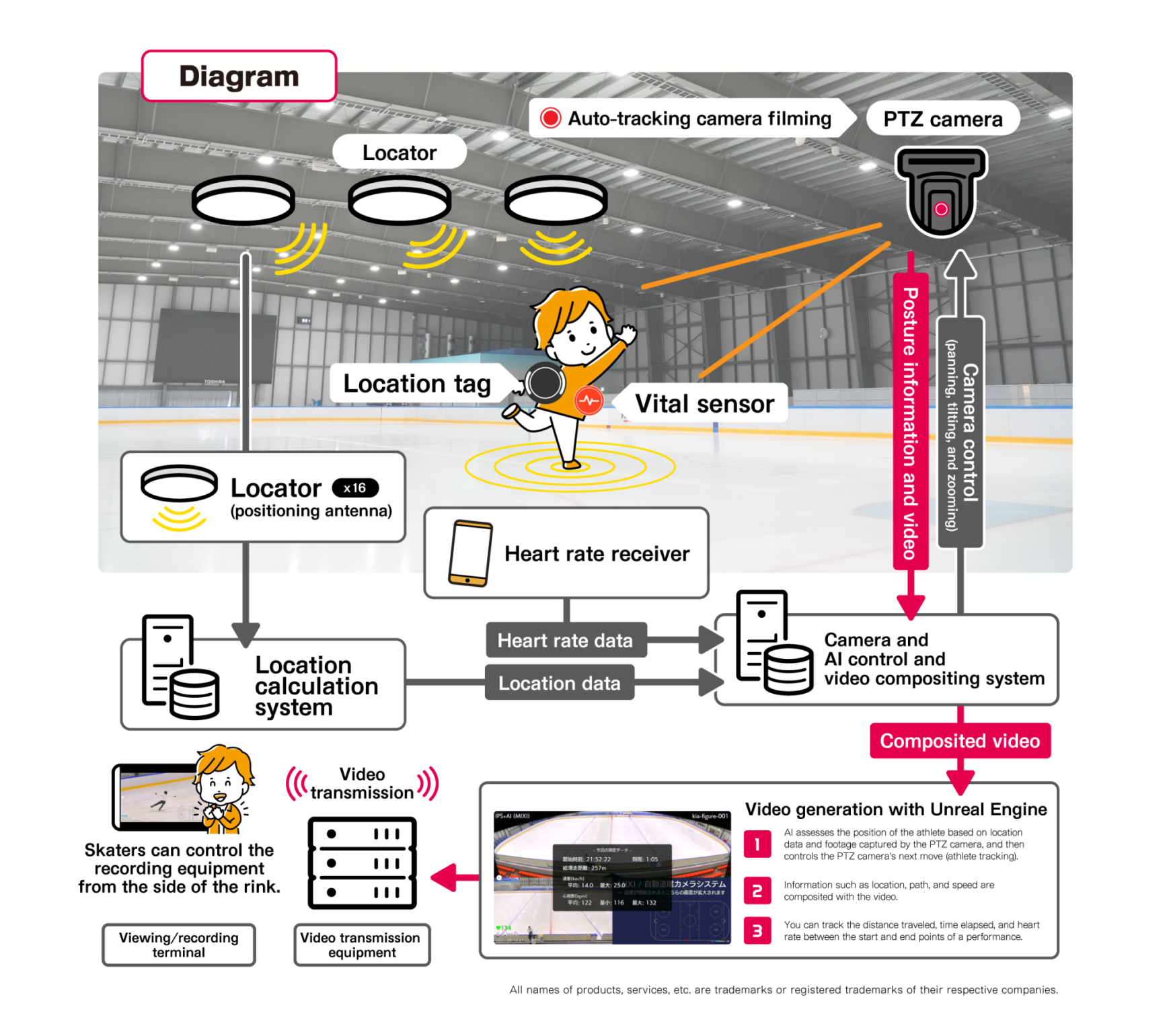
1. Sixteen locators (location antennas) installed throughout the arena determine the real-time positions of the athlete wearing a location tag.
2. A biometric sensor collects the athlete’s heart rate data, which is sent to the integrated system together with location data.
3. By combining location data with AI image analysis, the system predicts the athlete’s movements and automatically controls PTZ cameras, enabling automated tracking of high-speed, complex skating.
4. Using Unreal Engine, the system integrates video with data such as location, trajectory, speed, and heart rate to generate footage for training and performance analysis.
Press release about this initiative: MIXI develops auto-tracking camera system that can be used to improve the competitive performance of athletes. Utilization begins at a training location for figure skaters (Japanese only)