








SUSTAINABILITY
Human capital-related strategies, indicators, and targets

1, Overall Policy of Our Human Resources Strategy
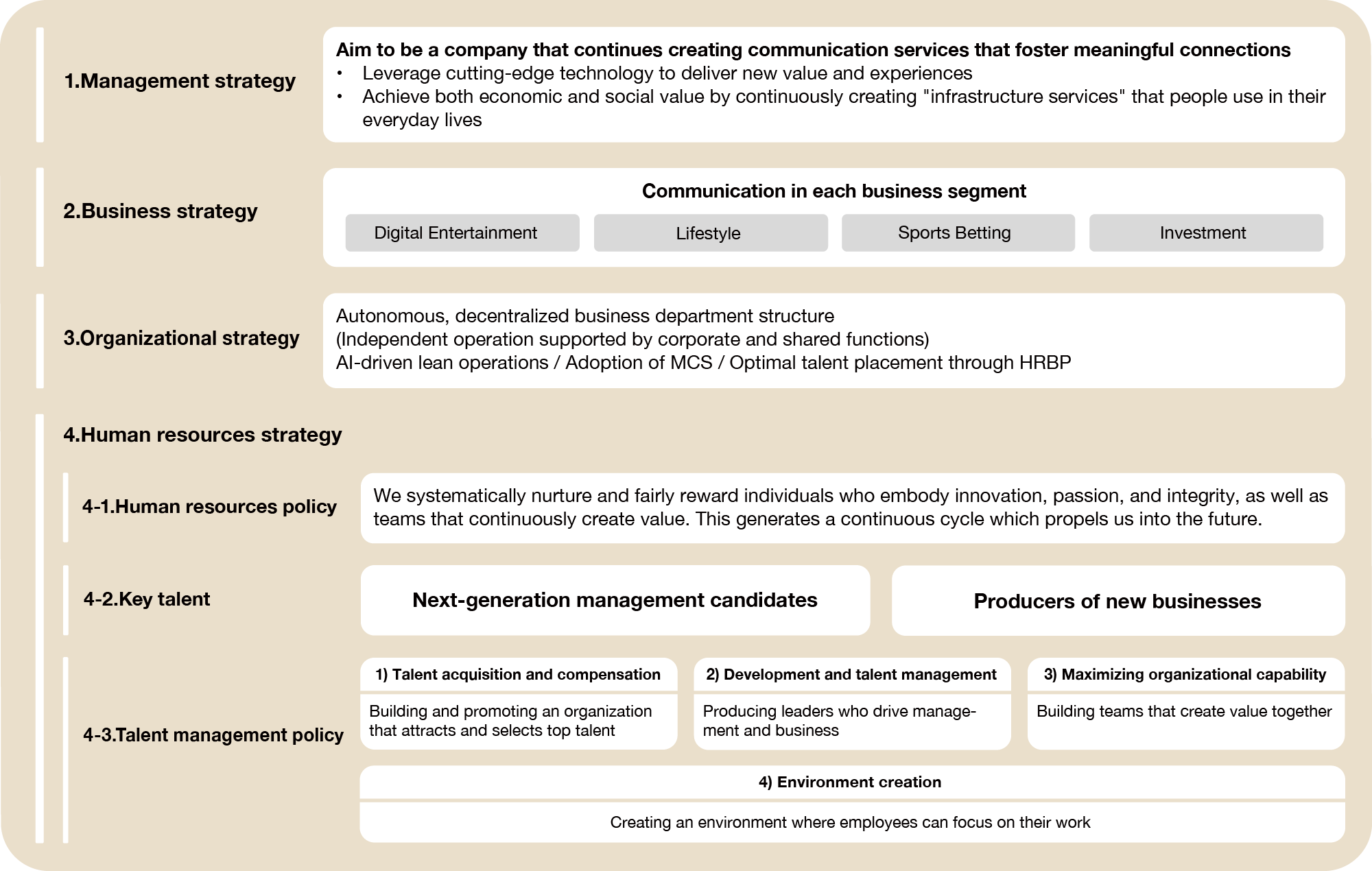
With the goal of being a company that continuously creates communication services that foster meaningful connections, we operate businesses centered around communication across various domains. To drive these diverse businesses forward, we employ an autonomous, decentralized business department system where each business department makes decisions and operates in a self-directed manner.
We believe that people are the foundation for realizing these management, business, and organizational strategies. Technology and business ideas are not valuable unless there are people who realize and manage them. Therefore, we position human capital as one of our most important assets and invest actively in it to enhance corporate value over the medium to long term.
Under this policy, we have established the following human resources policy.
<Human Resources Policy>
We systematically nurture and fairly reward individuals who embody innovation, passion, and integrity, as well as teams that continuously create value. This generates a continuous cycle which propels us into the future.
● Individuals who embody innovation, passion, and integrity
We aim for every employee to personally demonstrate our Values (compass for action) of innovation, passion, and integrity, enabling them to autonomously create new value.
We strive to maintain teams that leverage individual strengths while remaining committed to maximizing organizational results (corporate value and the value provided by each business and product).
To realize this human resources policy, we have designated “next-generation management candidates” and “new business producers” as our key human resources. We will focus on building a talent pipeline capable of executing our management strategy.
To ensure that all employees, including our key human resources, can perform at their full potential, we have established four pillars of our talent management policy: (1) Talent acquisition and compensation, (2) Development and talent management, (3) Maximizing organizational capability, and (4) Environment creation. We are actively pursuing various initiatives across these pillars.
Decisions regarding the formulation and advancement of our human resources strategy are made following regular reporting to and deliberation by the Board of Directors and the Management Council. This process ensures alignment between our management and human resources strategies, guaranteeing the effectiveness of our human capital investments.
2, Logic Model for Human Capital Management
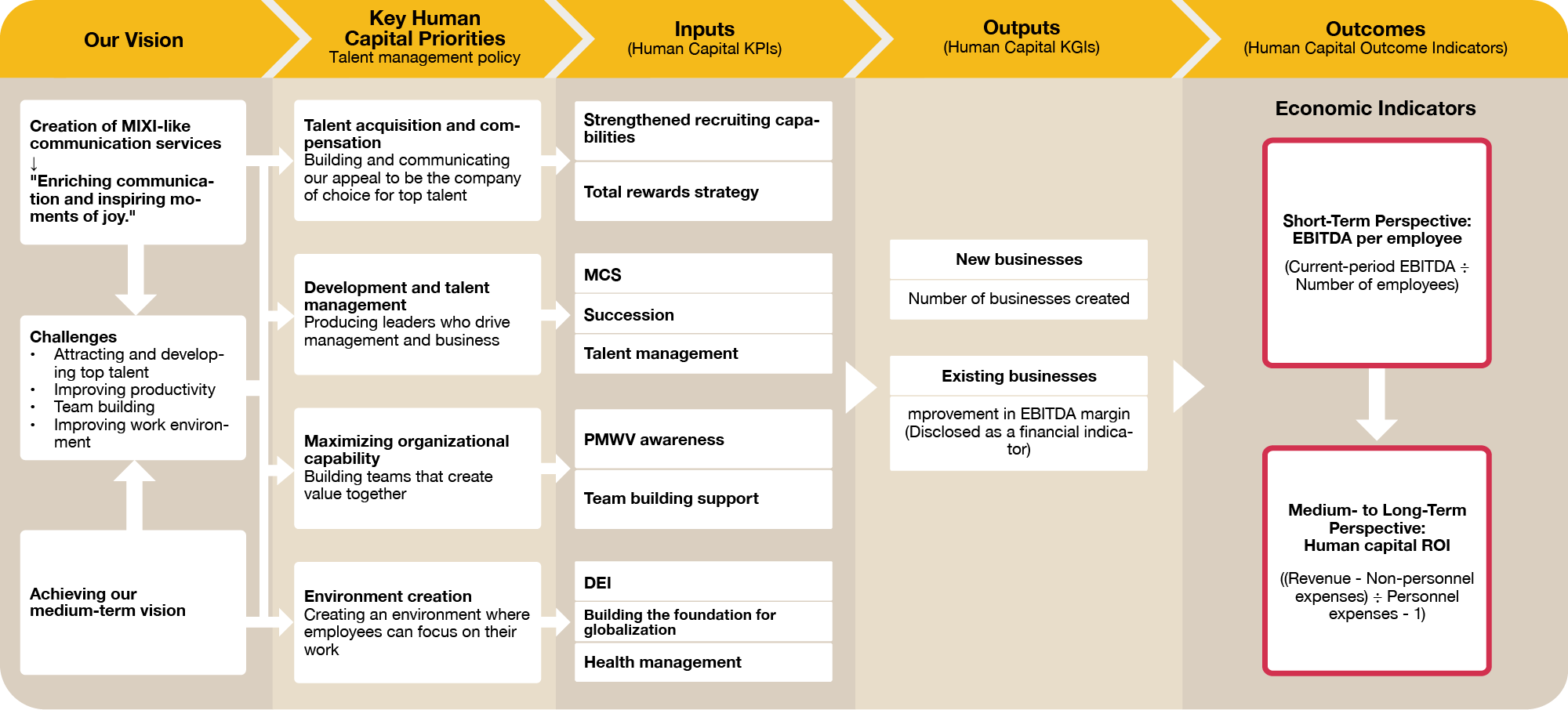
We have defined a logic model for human capital management which maps out how investments in human capital lead to sustainable increases in corporate value.
Specifically, to enhance the capabilities of the individuals and teams outlined in our human resources policy (inputs), we strategically allocate resources to four key areas—talent acquisition and compensation, development and talent management, maximizing organizational capability, and workplace environment development. We monitor the progress of these initiatives using key performance indicators (KPIs).
The accumulation of these KPIs feeds into key goal indicators (KGIs) (outputs), which reflect how human capital investments translate into business results. More specifically, we measure new business creation through the number of approvals for commercialization and the number of released products/services. Additionally, we view maintaining and improving the profitability of existing businesses as a key area in which the benefits of our investment in human capital are realized. We disclose and monitor EBITDA margin improvements in existing businesses as a financial metric.
In turn, these investments in human capital ultimately contribute to economic results (outcomes). When key talent drives businesses with high engagement and new services are continuously created, it culminates in an increase in EBITDA per employee and the maximization of human capital ROI. We drive our initiatives based on this logical framework.
3, Talent Management Policy and Specific Initiatives
To realize the aforementioned human resources policy and drive value creation, we have established the following four key areas and are implementing various initiatives:
1.Talent Acquisition and Compensation: Building and communicating our appeal to be the company of choice for top talent
2.Development and Talent Management: Producing leaders who drive management and business
3.Maximizing Organizational Capability: Building teams that create value together
4.Environment Creation: Creating an environment where employees can focus on their work
1)Talent Acquisition and Compensation: Building and communicating our appeal to be the company of choice for top talent
◆ Our Policy
To continue creating communication services that foster meaningful connections, MIXI, Inc. must remain the company of choice in the labor market.
We will build attractive environments and career paths where employees can work with pride.
◆ Challenges
As competition for talent continues to intensify, we recognize that relying solely on traditional compensation systems and recruitment methods is becoming increasingly insufficient to secure the quality and quantity of talent we need. Furthermore, to increase employee engagement and encourage long-term retention, we believe we must offer a comprehensive value proposition that includes not only monetary rewards but also meaningful work and growth opportunities.
◆ Measures and Actions
To address the challenges above, we are promoting the following initiatives.
・Rebuilding our total rewards strategy
We have redesigned our compensation system from a total rewards perspective, integrating monetary compensation with non-monetary rewards such as skill development opportunities and workstyle flexibility (with full implementation starting in the fiscal year ending March 2027). We are adjusting compensation levels to remain market-competitive and structuring our compensation system to reward various roles and contributions.
In tandem, we have revised our performance evaluation system to ensure that employee performance, growth, and contributions to organizational results are more accurately reflected in their treatment. We have also refined our systems and workstyles to support learning and taking on new challenges, promoting both employee initiative and the creation of organizational results.
・Establishing the “Fellow” position to attract and appoint highly specialized talent
To provide a platform where individuals with exceptional expertise can deliver cross-organizational value through their specialization rather than a traditional management track, we established “fellow” as our highest professional position in April 2026. By placing fellows on par with corporate officers and clearly defining a pinnacle for highly specialized careers, we aim to recruit top external talent and retain internal specialists. In the first year, we appointed three fellows: one promoted internally for outstanding expertise, and two recruited externally with strong track records in the IP content business and entertainment production domains.
・Strengthening employer branding
To attract highly specialized individuals who resonate with our Purpose and Values, we are strengthening our employer branding. We have set recruitment fulfillment rate as a KPI for key positions that are vital to business growth, such as management roles and highly specialized roles including engineering managers and product managers. To reach these target groups, we actively share information through our owned media and other channels.
2)Development and Talent Management: Producing leaders who drive management and business
◆ Our Policy
To execute our management strategy, it is essential that we produce a steady stream of leaders who can adapt to change and drive businesses forward even in uncertain environments.
To secure next-generation management candidates and new business producers, we will systematically develop and place talent in roles directly linked to executing our strategy, including global initiatives.
The FY2027 budget for training and self-development expenses per employee is 114,655 yen for the whole fiscal year (7,210 yen higher than the previous year).
◆Challenges
As our business diversifies and expands globally, a shortage of key talent could pose a risk to our medium- to long-term growth, namely next-generation management candidates with a business mindset and new business producers who play a central role in driving business. Additionally, MIXI’s unique expertise for creating communication services has historically been highly dependent on specific individuals, making the systematic transfer of this knowledge an organizational challenge.
◆Measures and Actions
To address the challenges above, we are promoting the following initiatives.
■Talent management: Building an optimal talent portfolio to support management strategy
To maximize our execution capability, we are working to visualize and optimize our company-wide talent portfolio.
・Identifying key talent and important investments: Based on our business growth stage and management challenges, we define employees who play particularly important roles as key talent and will continue to invest resources in them on a prioritized basis. We aim to build a system that systematically develops and dynamically deploys this key talent.
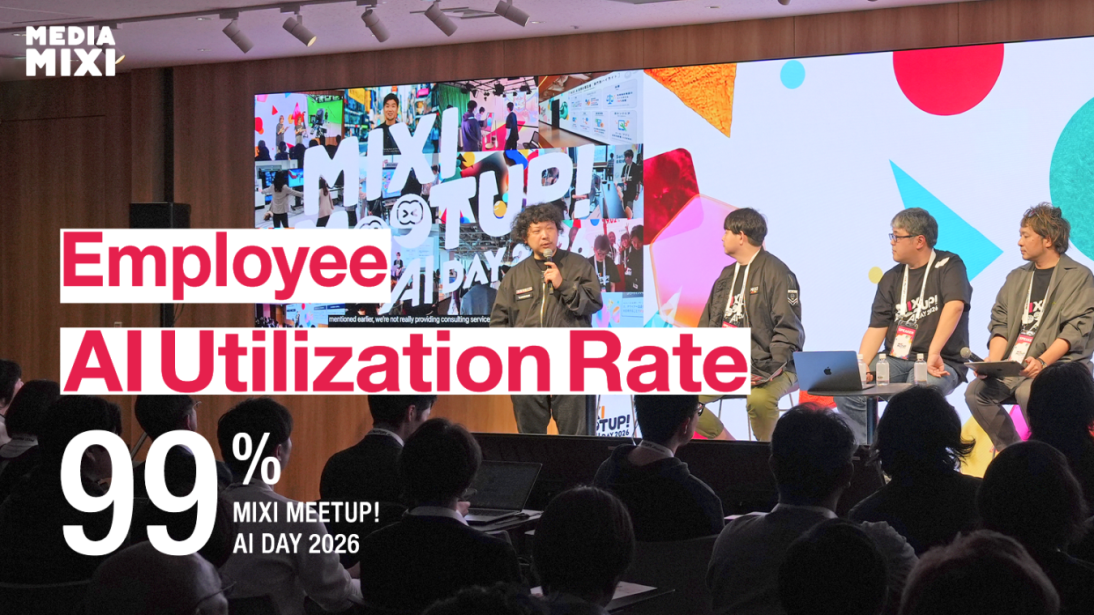
・Company-wide talent optimization: To maximize overall organizational performance, we are building a database of individual capabilities and experiences, and have begun testing AI-powered prototypes for candidate identification and talent matching. By ensuring the right people are in the right roles, we aim to build a leaner organizational structure and improve productivity.
■Succession planning: Systematic development of next-generation leaders and strengthening of governance
To ensure sustainable growth in the future, we are strengthening our systematic succession planning for management roles and candidates for such roles.
・Redefining management requirements: We have redefined the qualities and capabilities required of our management team from the perspectives of both business execution and oversight, with a deep understanding of our unique competitive strategy. By clearly stating these requirements, we have established a solid framework for selection and development.
・Building a transparent candidate selection process: We manage candidate selection systematically based on readiness. We ensure a highly transparent process free from arbitrary decisions through multi-faceted reviews on the execution side and deliberations by the Nomination and Compensation Committee, which includes outside directors.
・Formulating individual development plans: We are creating individual development plans tailored to each candidate’s readiness, strengths, and areas for growth. Through externally conducted competency assessments and training based on expected roles, we will establish a pipeline for systematically producing next-generation management talent.
■Standardization of MCS (MIXI-like Communication Services)
This initiative aims to institutionalize our unique expertise for consistently creating communication services that foster meaningful connections, turning it into a shared organizational language to pass on to the next generation.
・Linking talent management with capability development based on values and decision-making criteria: We believe the source of value creation lies not just in skills and visible achievements, but in understanding and embodying our corporate philosophy and values in daily work. We are currently defining talent requirements based on these values. Moving forward, we will link this closely with our talent management initiatives to accelerate the identification of key talent and systematically develop capabilities tailored to each individual’s strength and potential.
・Developing multi-faceted workshops and meetups: To instill the MCS concept as practical knowledge rather than mere theory, we run ongoing workshops and meetups for new graduates, mid-career hires, and key talent across in each business section. By using past business cases, these sessions allow participants to experience MIXI-style service design and decision-making through discussions, fostering a shared understanding and culture across the organization.
・Supporting knowledge utilization and improving repeatability through AI: We are working to make the insights and thought processes gained from past successes and failures easily accessible across the organization. Currently, we are using custom applications to provide an environment where workers can interact with AI to brainstorm and get feedback for day-to-day work or when drafting business proposals. This allows us to turn individual expertise into organizational assets, increasing the speed and accuracy of value creation.
3)Maximizing Organizational Capability: Building teams that create value together
◆ Our Policy
Valuable services are created not just by individual efforts, but through team collaboration. We aim to reliably build teams that respect one another while remaining committed to ambitious performance targets.
◆ Challenges
As our organization grows and roles become more specialized, there is a risk that cross-functional collaboration and candid discussions within teams may decline. Furthermore, while awareness and understanding of PMWV (our corporate philosophy of Purpose, Mission, MIXI Way, and Values) have increased, we recognize there is still room for improvement in translating these concepts into daily actions.
We refer to our corporate philosophy as PMWV.
Purpose: Enriching communication and inspiring moments of joy.
Mission: To provide space and opportunity for truly meaningful connections.
The MIXI Way (guiding principle for decision making): User surprise first.
Values (compass for action): Innovation, Passion, Integrity
◆ Measures and Actions
To address the challenges above, we are promoting the following initiatives.
・Spreading PMWV and fostering culture
We host an internal award show (MIXI AWARD) to recognize individuals and teams that best embody our PMWV, fostering a culture that commends these behaviors. We also measure the depth of PMWV awareness at the behavioral level through surveys, using the insights to drive improvement activities within each structure.
Additionally, as an inner branding initiative to make PMWV feel more accessible and engaging, we created a short animated series called “Pimudabu” (derived from a Japanese abbreviation of PMWV) featuring characters representing each element, which we broadcast regularly at company-wide morning assemblies. Employees are involved in the production across departments, including voicing the characters, which helps build empathy and a common language around PMWV.
・Visualizing and supporting team conditions
Through organizational surveys, we score and visualize each team’s psychological health, collaboration, and strategic alignment. Based on these results, our organizational development specialists and HRBPs support line managers by facilitating dialogue and conducting team-building workshops, helping to foster an environment where co-creation can thrive.
・Promotion of opportunities for communication
As the evolution of AI demands higher levels of intellectual productivity, we are redefining the value of face-to-face communication, which fosters spontaneous ideas and deep discussions. To strengthen teamwork and improve the quality of outputs, we continue to promote flexible and comfortable work environments through our unique hybrid work system, Marble Work (which aims for the optimal fusion of remote and office work), and our full-flextime system. Under our office attendance policy, we actively support the creation of opportunities for face-to-face communication tailored to the circumstances of each structure.
For example, we have introduced and operate OneTable, an expense subsidy system designed to promote non-work interaction for the purpose of building friendships and trust between sections and teams. By intentionally creating opportunities to meet in person, we aim to foster a culture of teamwork.
4)Environment Creation: Creating an environment where employees can focus on their work
◆ Our Policy
For employees to perform at their best, it is essential to have systems that provide peace of mind and an environment where they can focus. Our policy is to build a foundation where employees at various life stages with diverse values can thrive.
◆Challenges
As employee attributes and lifestyles diversify, uniform workstyles and systems may fail to fully unlock individual potential. In particular, while the ratio of female managers is on an upward trend, it has not yet reached our target level, and we recognize the need for continued promotion and development support.
◆Measures and Actions
To address the challenges above, we are promoting the following initiatives.
■Promoting DEI (Diversity, Equity, and Inclusion)
We aim to build an organization where everyone can work with psychological safety, regardless of gender, nationality, age, or background.
・Radical Support for Women’s Participation: The ratio of female managers rose from 16.8% in the fiscal year ended March 31, 2025, to 19.7% in the fiscal year ended March 31, 2026, showing a steady upward trend since the COVID-19 pandemic. However, a gap remains between the overall ratio of female employees (33.4%) and the ratio of female managers (19.7%). In particular, the low representation of women in senior management positions at the general manager level and above is a structural challenge to achieving our medium-term target of a 30% female manager ratio. Recognizing this, our first priority is obtaining a clear understanding of the current situation by conducting interviews with female employees and managers to understand their career perspectives and obstacles, as well as examining our promotion process. Based on these findings, we will review and refine our promotion process, and plan to strengthen individual career support and next-generation leadership training for candidate pools. The ratio of female employees across MIXI Group is 30.8%, and the ratio of female managers is 18.3%. Due to the difference in HR systems for each company, we currently only have non-consolidated targets. We will begin establishing group-wide targets and action plans in stages.
・Intercultural Understanding and Global Inclusion: With the expansion of overseas subsidiaries and the global development of existing businesses, MIXI Group as a whole must adapt to a global business environment. Against this backdrop, we host cross-cultural understanding training not only within MIXI but also for overseas subsidiaries. This initiative aims to improve communication skills to turn differences in culture and values into strengths, and to remove unconscious bias. By fostering an environment in which multinational teams can function smoothly, we aim to build a strong organizational foundation that supports global business growth.
・Building Systems That Embrace Diverse Individualities: We are committed to creating a workplace that respects diverse values and lifestyles, enabling each employee to work comfortably in their own way. Through the introduction of our Same-Sex Partnership Program, we have established a foundation that allows employees of diverse backgrounds, including LGBTQ+ employees, to work with peace of mind. In addition, beginning in April 2026, we introduced a cafeteria plan, which allows employees to flexibly choose benefits according to their individual values and needs. This initiative strengthens support for balancing professional responsibilities with childcare, caregiving, and personal health. We are also reviewing and expanding our leave systems, including broadening the eligible uses of care leave and reserve leave, to better accommodate a wider range of life events. Furthermore, we have extended the mandatory retirement age to 65 and provide employment opportunities through age 70. We have also strengthened our life-planning support through seminars on life planning and personal finance, helping employees build sustainable, long-term careers. Through these initiatives, we are creating an environment where people with diverse backgrounds can fully leverage their unique strengths and expertise.
・Promoting Employment of People with Disabilities: Our subsidiary MIXI EMPOWERMENT, Inc. has received Monisu certification from the Minister of Health, Labour and Welfare in recognition of its outstanding initiatives regarding the employment of people with disabilities (see note). MIXI is also proactively pursuing operational improvements through the use of AI. By creating an environment in which people with disabilities can fully utilize their abilities, diversity will be further promoted across MIXI Group.
Note: The Monisu certification was obtained by MIXI EMPOWERMENT, Inc., not by MIXI, Inc. itself.
■Promotion of health management
Based on the culture of communication that we have emphasized since our founding, we regard the physical, mental, and social wellbeing of our employees as an important management priority. In recognition of these efforts, we were certified under the 2026 KENKO Investment for Health Outstanding Organizations program (large enterprise category) as a White 500 corporation, which is a distinction awarded to the top 500 corporations. This program is promoted by the Ministry of Economy, Trade and Industry. We will continue to build an environment through health and productivity management where employees can fully demonstrate their natural capabilities.
Company-Wide Promotion Structure: The Wellness Promotion Group collaborates with employees to carry out health initiatives, with the President and Representative Director serving as the head of health management promotion. We have also established a governance structure that regularly reports KPI progress to the Board of Directors, optimizing health investments at the management level.
・Physical Health: We aim to maintain a 100% rate of completion for health checkups and achieve a completion rate of 80% or higher for secondary exams. We also implement initiatives that encourage voluntary health actions among employees, such as holding Veggie Checks in the employee cafeteria and organizing walking events.
・Mental Health: In addition to mental health training tailored to different organizational levels, we have established internal and external consultation desks to provide a support system for preventing mental health issues and ensuring early response.
・Social Health: We are creating an environment where employees can continue to work with peace of mind by enhancing support systems that help them balance work with medical treatment, childcare, and caregiving responsibilities, as well as by fostering an office environment that encourages natural communication.
■Thorough compliance education
As part of our compliance training, we provide crisis management training via e-learning. The training is targeted at all employees, and we achieve a 100% participation rate every year. The content of the crisis management training consists of nine required courses on topics such as compliance basics, business conduct guidelines, information security, and harassment prevention training.
4)Indicators and Targets
To measure the progress of our human capital strategy and the effectiveness of our human capital investments, we have established and monitor the following indicators based on our unique logic model for human capital management.
The target values for each indicator have been established as medium-term targets aimed at the early 2030s and aligned with our medium-term vision. We aim to achieve these levels early and continuously improve them thereafter.
Going forward, we plan to work closely with relevant sections and provide regular updates to management as we continue our efforts to strengthen human capital governance.
◆ Human Capital Outcome Indicators (Financial Results)
These indicators measure whether investments in human capital ultimately lead to economic value (financial results). Based on the view that employees are not a cost but a form of capital whose returns should be maximized, we have established these targets not as one-time milestones, but as goals that should be continuously improved over time. Accordingly, we aim to maintain and enhance these levels over the medium to long term.
|
Indicator |
Result at End of FY2026 |
Medium-Term Target* |
Notes |
|
EBITDA per employee |
18.1 million yen |
25.0 million yen |
EBITDA ÷ number of employees |
|
Human capital ROI |
162.4% |
200.0% |
((Operating income + personnel expenses) ÷ personnel expenses – 1) x 100 |
※These target levels are set with the early 2030s in mind. Rather than merely achieving these levels temporarily, we aim to establish a state where we can stably and continuously maintain and improve them, taking volatility into account.
◆ Human Capital KGIs
In our logic model for human capital management, we have newly established the number of businesses created as a key goal indicator (KGI) that serves as a leading indicator for medium- to long-term financial results.
The number of businesses created (the number of approvals for commercialization and the number of released products/services) is an indicator to measure whether investments in human capital are manifesting as actual business creation capabilities. By getting a clear understanding of whether investments in talent bear fruit as the “ability to create new services”, we directly capture the connection between human capital and business results.
We drive various initiatives based on the logic that continuously improving this KGI will lead to maximizing EBITDA per employee and human capital ROI, which are set as outcomes.
|
Indicator |
Result at End of FY2026 |
Medium-Term Target |
Notes |
|
Number of businesses created |
1commercialization approval, |
ー |
These indicators are not assigned target values and are instead positioned as metrics to be managed through continuous monitoring of their trends. |
◆ Human Capital KPIs
We have established KPIs in four focus areas as leading indicators to increase the number of businesses created (human capital KGI) and maximize final financial results (outcomes). By steadily achieving these KPIs and accumulating actions, we set the stage for key talent to maximize their capabilities. As a result, we will increase the number of businesses created, which in turn will lead to the sustainable enhancement of corporate value (outcomes) such as EBITDA per employee and human capital ROI.
| Category | Indicator | Result at End of FY2026 | Medium-Term Target | Notes |
|---|---|---|---|---|
| Talent acquisition and compensation |
Recruitment fulfillment rate for key positions |
44.4% |
80.0% |
Number of hires for management/specialist roles ÷ external recruitment target |
| Wage (monthly salary) growth rate for key talent |
11.4% |
Maintain 10.0% or higher |
Year-on-year wage (monthly salary) growth rate for key talent defined by our unique criteria |
|
| Reference: Wage (monthly salary) growth rate for all employees |
6.9% |
Maintain 5.0% or higher |
Year-on-year wage (monthly salary) growth rate for all employees (non-consolidated) |
|
| Development and talent management | Management talent fulfillment rate |
143.8% |
200.0% |
Number of management talent candidates with medium-term or higher readiness ÷ number of active management talent |
| Engagement score of key talent |
75.7% |
80.0% |
Engagement score of key talent defined by our unique criteria |
|
|
Reference: |
74.0% |
75.0% |
Engagement score of all employees |
|
| Maximizing organizational capability (PMWV awareness ) |
Recognition |
89.1% |
100% |
Measure of recognition of PMWV |
|
Understanding |
89.6% |
95% |
Measure of understanding of PMWV |
|
|
Identification |
83.9% |
90% |
Measure of identification with PMWV |
|
|
Action |
74.7% |
85% |
Measure of action related to PMWV |
|
| Maximizing organizational capability |
Teamwork-related scores |
67.6% |
80.0% |
Scores of highly correlated categories in our teamwork indicators |
| Environment creation | (Employment rate of diverse talent) Female managers (%) |
19.7% |
30.0% |
Number of female managers ÷ total number of managers |
| Health Management |
“White 500” certification |
Retain White 500 certification |
– |
(1) b Compensation Determination Policy
In accordance with our total rewards policy, employee compensation is determined based on two core principles: maintaining market competitiveness and providing fair rewards for performance and behavior, as outlined below.
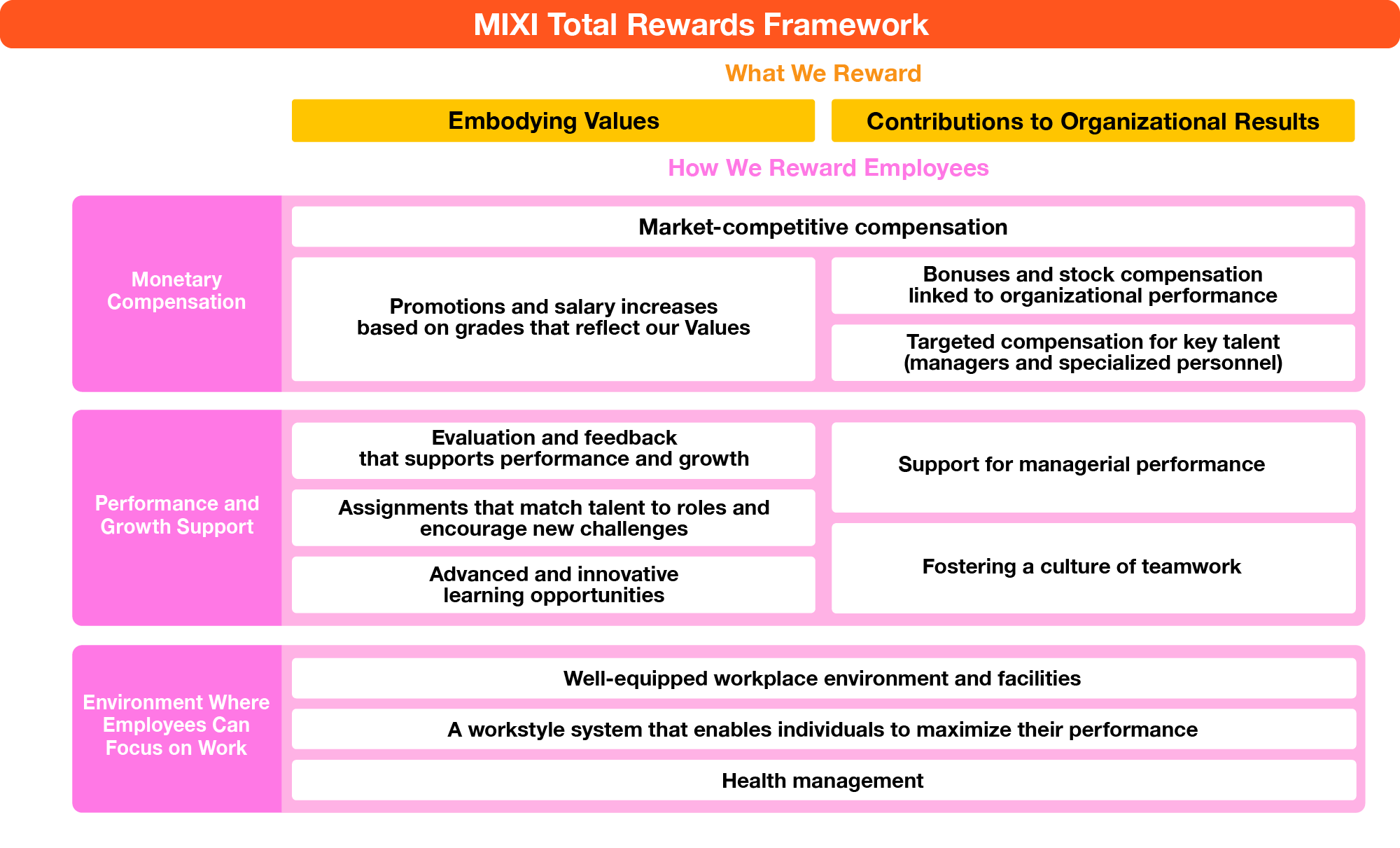
・Determining Compensation Levels Linked to Market Standards
We benchmark our compensation levels against the top 25% of large domestic companies. By establishing this higher compensation range as a foundation, we aim to acquire and retain key talent who drive the execution of our business strategies.
・Differentiated monthly salary decisions based on employees’ growth and demonstration of our Values
Monthly salaries are determined by grades set according to individual capabilities and roles, as well as competency evaluations based on our Values (innovation, passion, and integrity). Under this simple mechanism, employees receive a raise if their actual actions exceed the competency requirements for their grade, and a pay cut if they fall below. This strongly encourages employees’ desire to grow while ensuring transparent and high-contrast compensation management.
・Determining Incentives With an Emphasis on Commitment to Organizational Results
Monetary compensation such as bonuses is determined with an emphasis on the level of contribution to organizational targets, not just individual results. By placing “achievement of organizational targets” at the core of evaluation for managers and “contribution to organizational results” for non-managers, we design incentives to take on ambitious targets as one organization and share the results.
・Granting Stock Compensation To Encourage Medium- to Long-Term Corporate Value Enhancement
In addition to monetary compensation, we grant equity compensation to employees at or above a certain management level to foster a management perspective and increase their motivation to contribute to medium- to long-term corporate value. Through sharing value with shareholders and investors, we aim for a compensation system where management-level talent commits to the sustainable growth of the company. We will continuously review the scope of eligible recipients in light of the business environment and the progress of our business strategies.
※The following information regarding human capital for the relevant fiscal years pertains solely to MIXI, Inc. We are gradually developing strategic policies for our entire Group, with plans to transition to consolidated Group-wide disclosures over the medium to long term.